NobelReplace® CC
A tapered body for straightforward, well-understood cases
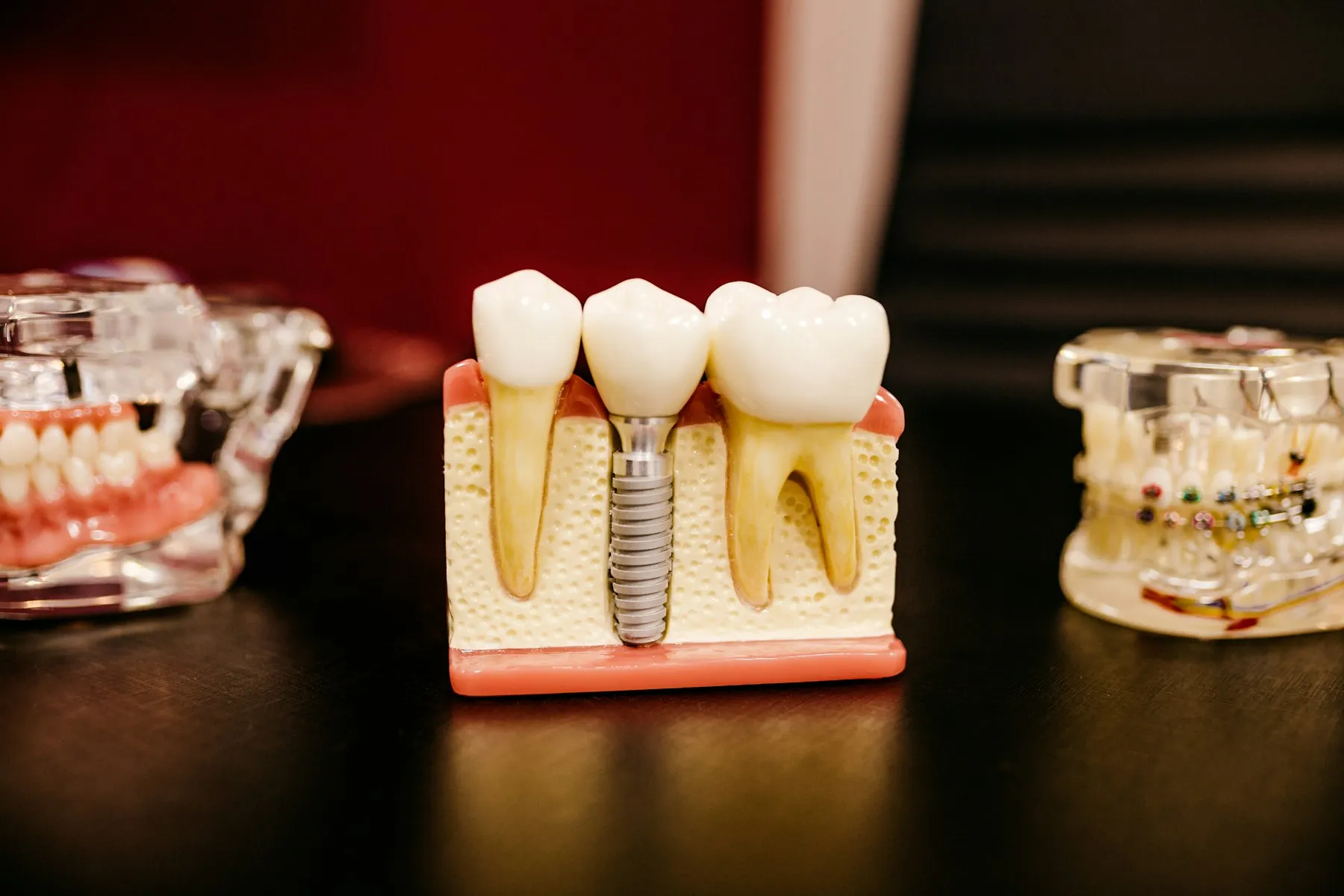
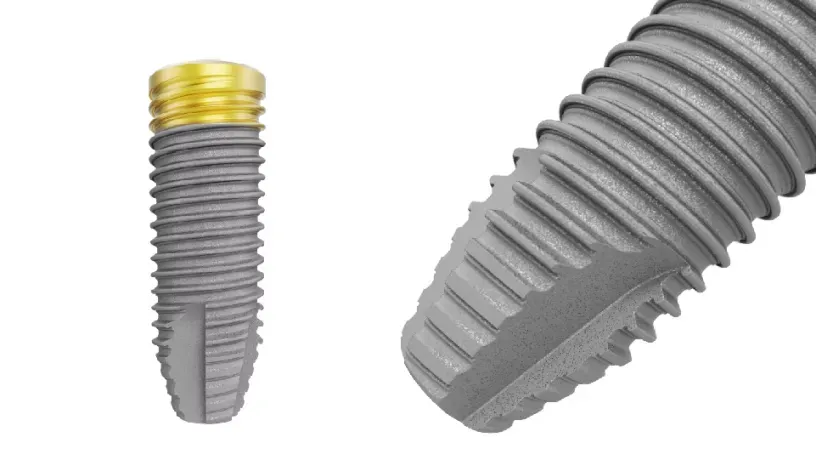
NobelReplace Conical Connection is a tapered implant intended for a broad range of everyday restorative situations — most often a single missing tooth in bone that is adequate but not generous. Its root-like shape lets it sit in a site where the space between adjacent roots is narrow at the tip, and it shares the conical connection used across the range, so the abutment and crown options are the familiar ones. It is not a specialist implant for difficult anatomy; it is the sensible choice when the case does not demand one. Suitability is determined by the treating team after examination and radiological assessment.
Clinical situations where it may be considered
- Single missing tooth
- The most common indication, where a crown will be carried on one implant in a healed site.
- Converging roots
- Where neighbouring roots lean towards each other, a tapered tip may fit the available space between them.
- Concave ridges
- Where the outer surface of the jaw curves inward below the crest, a tapered body may follow that contour and stay within bone.
- Short-span bridges
- Two implants carrying a small bridge may be considered where the bone supports it.
Why a clinician may select it
- The case is a routine single tooth and does not call for a specialist design
- Adjacent root positions leave a narrow corridor at depth that a tapered tip can respect
- The ridge is concave below the crest and a tapered body stays within the bone envelope
- The prosthetic plan uses the same conical connection components as the rest of the treatment
- A predictable, well-documented workflow is preferable to a more demanding protocol
When another system may be selected instead
If the implant is going into a fresh socket or into markedly soft bone, a condensing design such as NobelActive may achieve a better fit on the day. If several implants must be aligned to carry a full-arch framework, NobelParallel's straight walls simplify that. And if the treating team is working to the N1 protocol, the site preparation and the implant itself both differ. NobelReplace is chosen because the case is straightforward — not because it is a default.
The case for an unremarkable implant
Most implant treatment is not complicated. One tooth is missing, the bone around the gap has healed, the neighbouring teeth are sound, and the patient is otherwise well. In that situation the useful question is not “which is the most advanced system available” but “which system does this job with the fewest variables”.
That framing is worth stating plainly, because a patient reading about implants online will mostly encounter descriptions of difficult cases and the specialist designs that address them. Difficult cases are more interesting to write about. They are not more common.
Why the tip shape still matters in a simple case
Even a routine site has constraints. Roots of adjacent teeth are rarely perfectly upright — they often lean towards the gap, narrowing the space available at depth. The outer wall of the jaw is frequently concave below the crest, so a straight implant angled correctly at the top can still threaten to perforate that wall further down.
A tapered body addresses both without needing a specialist protocol: it takes up less room at the tip and follows a curved bone envelope more naturally. That is the whole argument, and it is a modest one — which is the point.
What the manufacturer reports
Nobel Biocare reports a 98.4% mean survival rate for the Replace implant family across 130 clinical studies, involving more than 11,900 implants in over 4,100 patients, across more than 24 years of use.
That 24-year span is the longest of any current system in the range and it is the family’s real distinction — but the figure covers several generations of Replace implants rather than one product, and it is a manufacturer aggregate rather than a single trial.
An independent three-year study of 118 NobelReplace conical connection implants in 54 patients, immediately loaded, reported two implant losses — a 1.7% failure rate — and mean marginal bone loss of 0.68 mm. One cohort, not a universal expectation, but a useful piece of real-world reporting.
Surface options
Available with TiUnite or TiUltra.
What determines the answer for you
Neither this page nor any photograph can establish whether your site is straightforward. That requires clinical examination and appropriate radiological assessment; a CBCT scan is what shows the width of bone available and the position of the nerve in the lower jaw.
Send a recent panoramic radiograph or CBCT with a note on what you would like to achieve, and the clinical team at Taki Dent can review it and set out a preliminary plan — approach, number of implants, expected visits and a cost range. The final implant system is selected by the clinical team.