Nobel implant treatment options
The right treatment is not the largest one available, nor the one attached to the lowest quote. It is the one that fits the bone you have, the teeth you need and the way you bite. Every page below sets out the stages, what the treatment turns on, and the alternatives — including doing nothing.
-
Single Nobel implant
One missing tooth, replaced without touching the teeth beside it
A single implant replaces one missing tooth with a titanium fixture in the jaw and a crown on top. Its main advantage over a conventional bridge is what it does not do: it leaves the neighbouring teeth untouched, where a bridge requires them to be cut down to carry the replacement.
- Implants required
- One per missing tooth
- Typical visits to the clinic
- Two treatment visits, separated by healing
-
Immediate Nobel implant placement
Placing the implant at the same visit as the extraction
Immediate placement means the implant goes into the socket at the same appointment the tooth comes out, rather than waiting months for the site to heal first. Where it works, it removes a stage from the treatment and preserves the shape of the gum and bone around the site.
- Decision point
- Confirmed during surgery, not only beforehand
- Socket walls
- Must be substantially intact
-
Full-arch Nobel implants
Replacing a whole jaw of teeth with a fixed bridge on implants
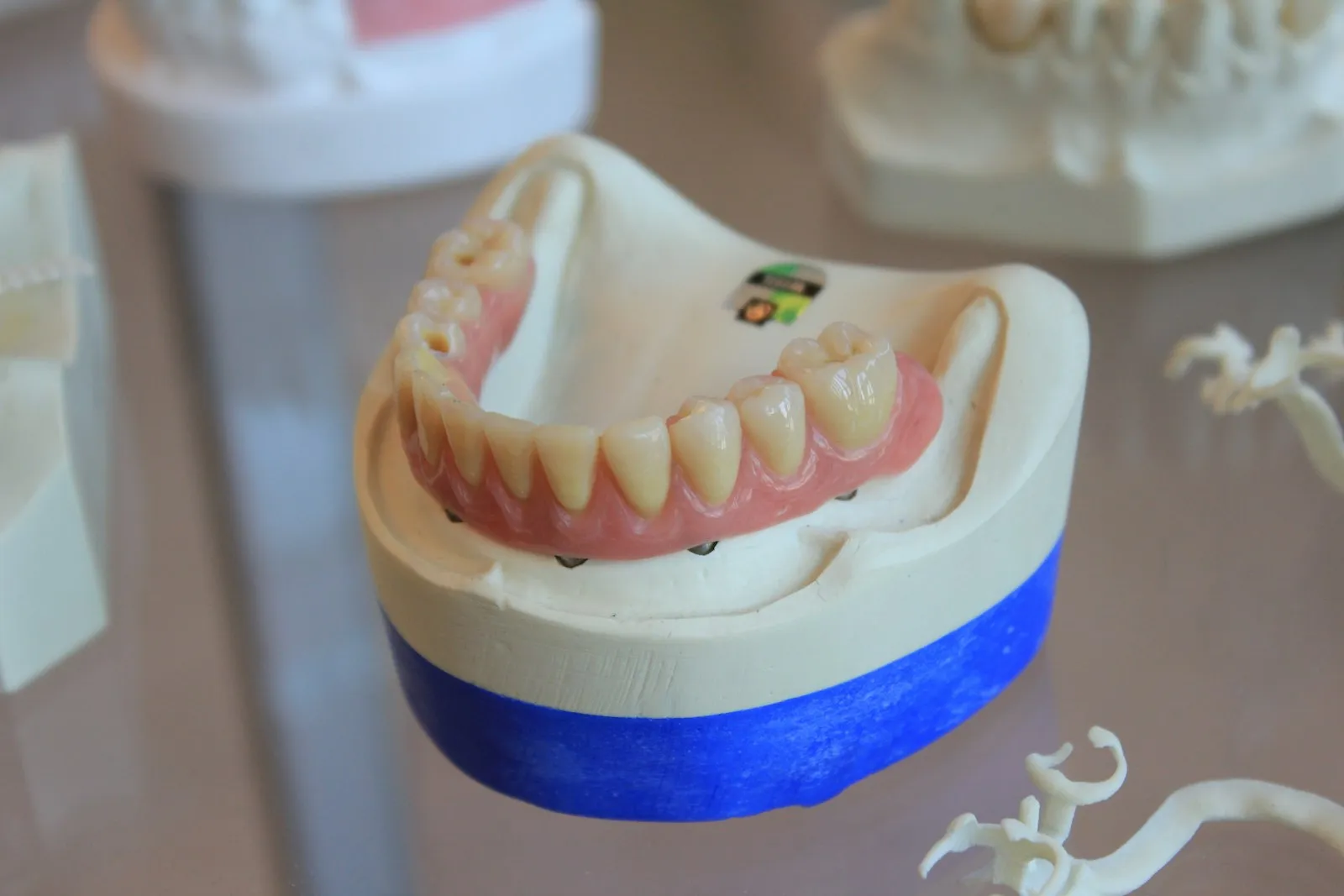
A full-arch treatment replaces every tooth in one jaw with a fixed bridge carried on implants. Unlike a denture it does not rest on the gum and is not removed, and unlike single implants it does not need one implant per tooth — the bridge spans between a smaller number of well-placed supports.
- Implants per arch
- Typically four to six, decided by the bone
- Fixed or removable
- Fixed — not taken out by the patient
-
Nobel All-on-4
A full arch of fixed teeth on four implants, in eligible patients
All-on-4 is a treatment concept defined by Nobel Biocare in which a full arch of fixed teeth is carried on four implants — two placed vertically at the front, two angled at the back to use the bone that remains without entering the sinus. Angling the rear implants is the idea that makes the concept work, because it often removes the need to graft the back of the jaw.
- Implants per arch
- Four
- Rear implant position
- Angled to use available bone
-
Nobel All-on-6
A full arch on six implants, where the bone supports the extra support
All-on-6 describes a full arch of fixed teeth carried on six implants rather than four. The extra pair spreads the chewing load across more anchorage points and shortens the unsupported spans in the bridge, which is why it is often preferred where the bone allows it and the bite is heavy.
- Implants per arch
- Six
- Load distribution
- Spread across more anchorage points
-
Bone grafting for Nobel implants
Rebuilding the site when there is not enough bone to hold an implant
An implant needs bone around it on every side. Where a tooth has been missing for years, or was lost to infection or a fracture, the ridge may be too narrow or too short for that.
- Reason needed
- Insufficient bone width or height at the planned site
- Timing
- Simultaneous with implant placement, or staged before it
-
Sinus lift for Nobel implants
Making room in the upper back jaw where the sinus has taken the space
Above the back teeth of the upper jaw sits the maxillary sinus, an air-filled cavity. When those teeth are lost, the sinus tends to expand downwards into the space their roots occupied, and the bone left between the sinus floor and the mouth can become too shallow to hold an implant.
- Reason needed
- Insufficient bone height below the maxillary sinus
- Jaw affected
- Upper, back region only
Start with a clinical assessment
Send your X-ray and tell us what you would like to achieve. The clinical team at Taki Dent will review your case and prepare an individual treatment proposal where sufficient information is available.
A final diagnosis and treatment plan can only be confirmed after clinical examination and appropriate radiological assessment.