Nobel implant cost in Turkey — what actually changes the price
Every clinic quotes a per-implant figure and almost none of them mean the same thing by it. Here is what an implant estimate is made of, and which lines move it most.
What this article establishes
- The fixture is usually the smaller share; the crown or bridge is often the largest
- Grafting and sinus lifts are the biggest variable, and only a CBCT scan reveals them
- A quote produced without a scan has an assumption inside it, and it is usually about bone
Why one number is never the answer
An implant treatment is not one product. It is at minimum three components and two procedures, and almost every single-figure quote has made silent assumptions about all five.
That is why two clinics can quote numbers that differ by a factor of three and both be quoting honestly — they are pricing different things. Before comparing anything, you need to know what a quote contains.
The five lines
1. The fixture
The titanium implant that goes into the bone. This is what people mean when they say “implant”, and on its own it is usually the smaller share of the total. The manufacturer matters here, and it matters less than most patients expect relative to the other four lines.
2. The abutment
The connector between the fixture and the visible tooth. A standard abutment costs less than a custom one. A custom abutment is sometimes what makes the crown emerge from the gum correctly, particularly at the front where the shape of the gum is what makes the tooth look real.
3. The crown, bridge or full-arch prosthesis
The part you can see. Material choice moves this considerably — and on a full arch it is frequently the largest single line in the estimate, larger than all the implants combined.
This is where “cheap implants” quotes usually hide their compromise. The fixture is well-known and the bridge is not specified.
4. The surgery
Placement itself, plus any extraction, bone grafting or sinus lift the site requires. This is the line a scan changes most, and the one most often absent from an online quote.
5. The provisional restoration
A temporary tooth, where the case allows one. It is a real cost with real laboratory work behind it, and it should appear as its own line rather than being assumed either in or out.
What moves the number most
Not the brand of the implant. What moves an estimate is:
Whether your site needs rebuilding before an implant can go in. A staged bone graft adds months and a separate procedure. A lateral-window sinus lift does the same. Either can change a straightforward case into a two-stage one.
How many implants the plan actually needs, which follows from the bone and the design of the teeth rather than from a price tier.
What the final teeth are made of.
How many visits the plan assumes, which for an international patient is also a travel cost you should be adding yourself.
Why a quote without a scan is a guess
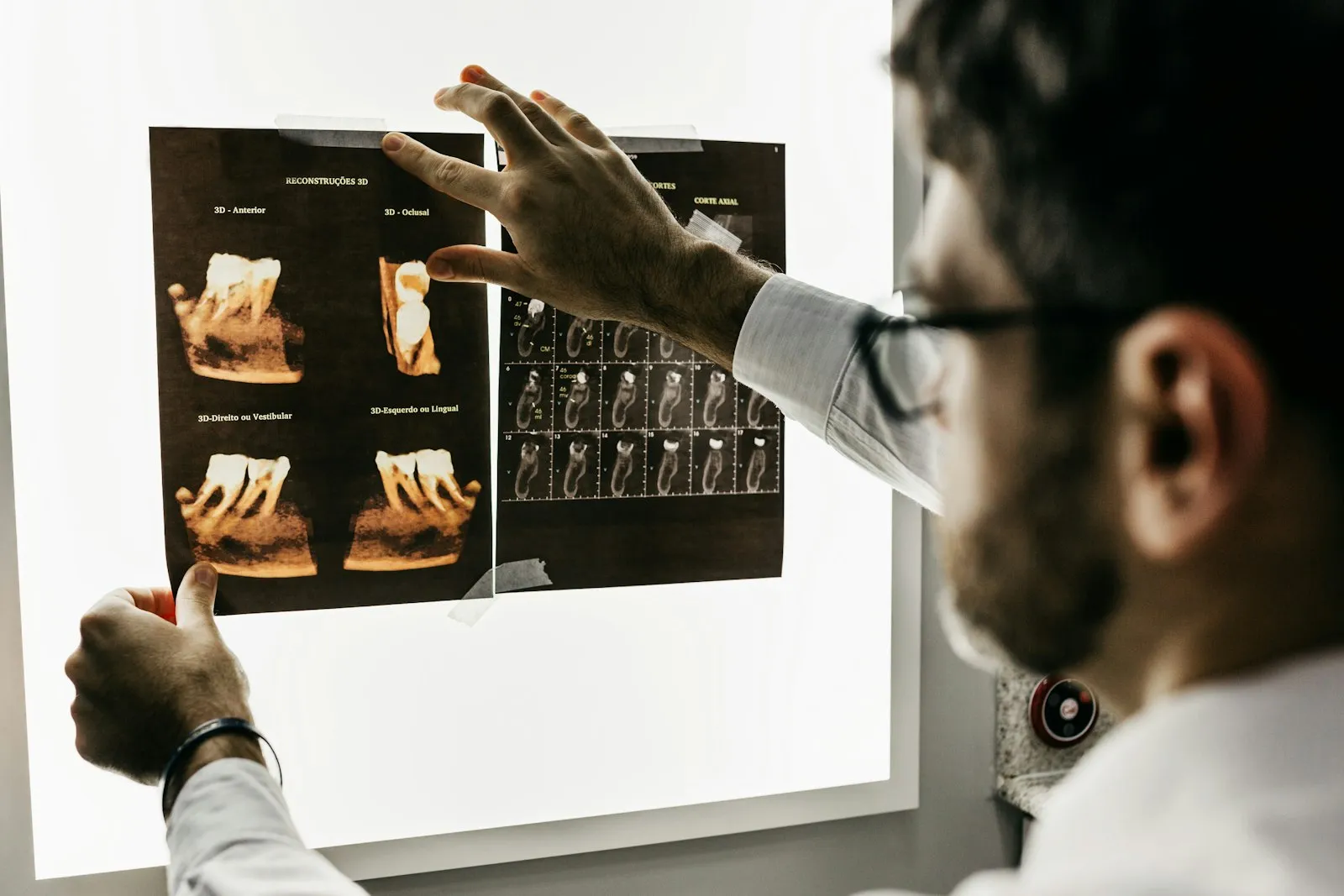
A panoramic radiograph shows bone height reasonably well and bone width not at all. Width is usually what is missing.
A ridge that looks perfectly adequate on a panoramic can turn out, on a CBCT scan, to be a knife-edge a few millimetres across. The difference between “implant” and “graft, heal, then implant” is months and a second procedure — and it is invisible until someone looks properly.
This is the single most common reason a treatment plan changes between the online quote and the clinic. It is also entirely avoidable. Get the CBCT before you travel, and the plan you are quoted is the plan you receive.
It is why the clinical team at Taki Dent asks for imaging before putting numbers on anything. A range given after seeing your scan is worth more than a precise figure given without it.
Turkey, specifically
The cost difference between Turkey and the UK, Germany or the Netherlands is real, and it is mostly structural: staff costs, premises costs, laboratory costs and currency. It is not, in a serious clinic, a difference in the implant that goes in — the fixtures are the same globally traded components with the same regulatory clearances.
What varies between clinics in Turkey, as everywhere, is the rest of the list: whether the CBCT is on site, who does the surgery, whether the restorative work is planned by a prosthodontist, what the bridge is made of, and what happens if something needs attention in three years.
Those are the questions worth asking. “How much per implant” is the question that tells you least.
The costs that do not appear on the quote
Three of them, and they are the ones patients discover after committing.
Travel, twice. Most international implant treatment runs across two visits separated by healing. Flights, accommodation and time off work are a real part of the total and they belong in your own arithmetic even though no clinic will put them in theirs.
The gap between visits. If a staged graft is needed, that gap becomes months rather than weeks, and the second trip may need rescheduling. Ask before you book anything how many visits the plan assumes and roughly how far apart, so the flights fit the treatment rather than the other way round.
Aftercare where you live. You will need someone near home to check the work at intervals. That is normal for implant treatment anywhere, and it is worth having a dentist lined up rather than discovering the need in year three.
What the lowest quotes are usually missing
Not the implant. Almost always one of these:
- The abutment, quoted separately and mentioned quietly later
- A temporary tooth, assumed out of the price
- The material of the crown or bridge, unspecified — the largest variable in the whole estimate
- Any grafting, because no scan was taken and so nothing was found
- The number of visits, which turns out to be three rather than two
A quote that is genuinely lower because the clinic’s costs are lower is a real thing and Turkey is a real example of it. A quote that is lower because four lines are missing is a different thing, and they look identical until you ask.
What you should leave the clinic with
This affects cost later, so it belongs in a cost article.
Ask for your implant records in writing before you fly home: manufacturer, system name, the diameter and length of each implant, the positions they occupy, the date, and the components used. Photograph it.
Ten years from now, if a screw loosens or a crown fractures, a dentist near you needs that information to source a part that fits. With it, the repair is routine. Without it, it becomes detective work — radiographs compared against identification atlases, sometimes a component removed just to look at the connection — and occasionally the answer is that more of the work has to be redone than the fracture itself required.
That is the most avoidable large cost in implant dentistry, and it is avoided with a piece of paper.
The costs that come after
Implants are not maintenance-free. They need daily cleaning, the right tools for cleaning underneath a bridge, and professional review at intervals the clinical team sets. Those reviews have a cost, and they are part of what implant treatment actually involves over the years that follow.
The published long-term evidence — a 10-year survival estimate of 96.4% across implant systems — describes implants that were maintained. It is not a description of what happens to an implant nobody looks at again.
Any presentation of implants as a one-off purchase requiring nothing further is leaving out the part that determines whether you are in the 96.4%.
How to compare two quotes properly
Ask both clinics for the same five things:
- The five lines above, separated. If a quote does not distinguish the fixture from the crown, it is not yet a plan.
- What is included and what is not. Extractions? Temporary teeth? The follow-up visits?
- How many visits it assumes, and roughly how far apart.
- What happens if the plan changes after examination. It sometimes does; the time to learn how that is handled is before you fly.
- What documentation you leave with — the implant system, dimensions and positions placed. If you ever need care elsewhere, that record is what makes it straightforward.
A clinic that answers all five in writing has told you more about itself than the number did.
Why the same treatment costs less here
It is worth being specific rather than mysterious about it, because “cheap dentistry abroad” is a phrase that makes people suspicious for good reasons.
The difference is structural. Clinical salaries, premises, laboratory work and local currency all sit at a different level in Türkiye than in the UK, Germany or the Netherlands. A dental technician’s day and a treatment room’s rent cost what they cost in the local economy, and a full-arch bridge is substantially technician time.
What does not change is the implant itself. Fixtures are globally traded medical devices with the same regulatory clearances wherever they are sold — a NobelActive placed in Antalya is the same component as one placed in Munich, at broadly the same wholesale cost. Any clinic implying it sources implants more cheaply is describing something you should ask about rather than a saving.
So the honest framing is that the labour and the overheads are cheaper, the components are not, and the clinical standard depends entirely on the clinic rather than the country. Which is precisely why the questions in the next section are about the clinic.
Getting a written estimate
There is no honest per-implant figure that applies to everyone, and this site does not publish one for that reason.
What can be produced, once someone has seen your images, is a written outline: the likely approach, the number of implants, whether grafting is on the table, the expected visits and a cost range with the lines separated.
A final plan and price are confirmed after clinical examination and appropriate radiological assessment at the clinic. Send a recent panoramic radiograph or CBCT scan with a note on what you would like to achieve, and the clinical team at Taki Dent will put the range together — with the reasoning attached, which is the part that lets you compare it against anyone else’s.